
by Chris Thompson
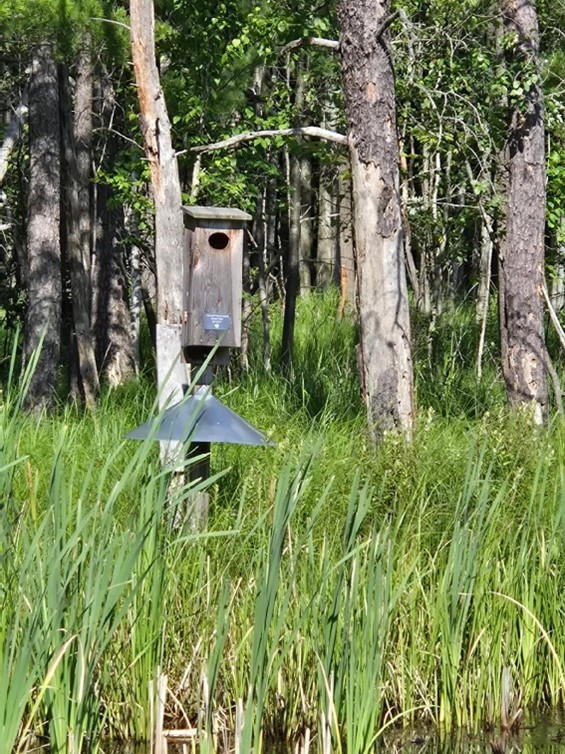
While exploring Schmeeckle Reserve, have you ever noticed large bird houses, about the size of a school backpack (above) in the wetland areas and wondered what those are for? Well, these are possible homes for one of Wisconsin’s tree nesting ducks: the well named – Wood Duck (Aix sponsa). While some other ducks may utilize tree cavities to nest (i.e. the Hooded Merganser), Wood Ducks are our most common of the cavity nesters and the one most likely seen in Schmeeckle Reserve.
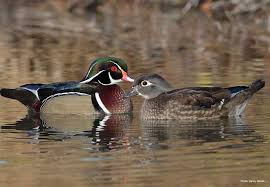
Adult Wood Ducks, Ducks Unlimited Photo
Wood Duck is considered one of the most colorful duck species in North America, with males (left in the photo above) being known for their iridescent plumage and pronounced head crest. Female (right) Wood Ducks maintain a more subdued and drab coloration. In terms of size, they are slightly smaller than the more commonly seen Mallard.
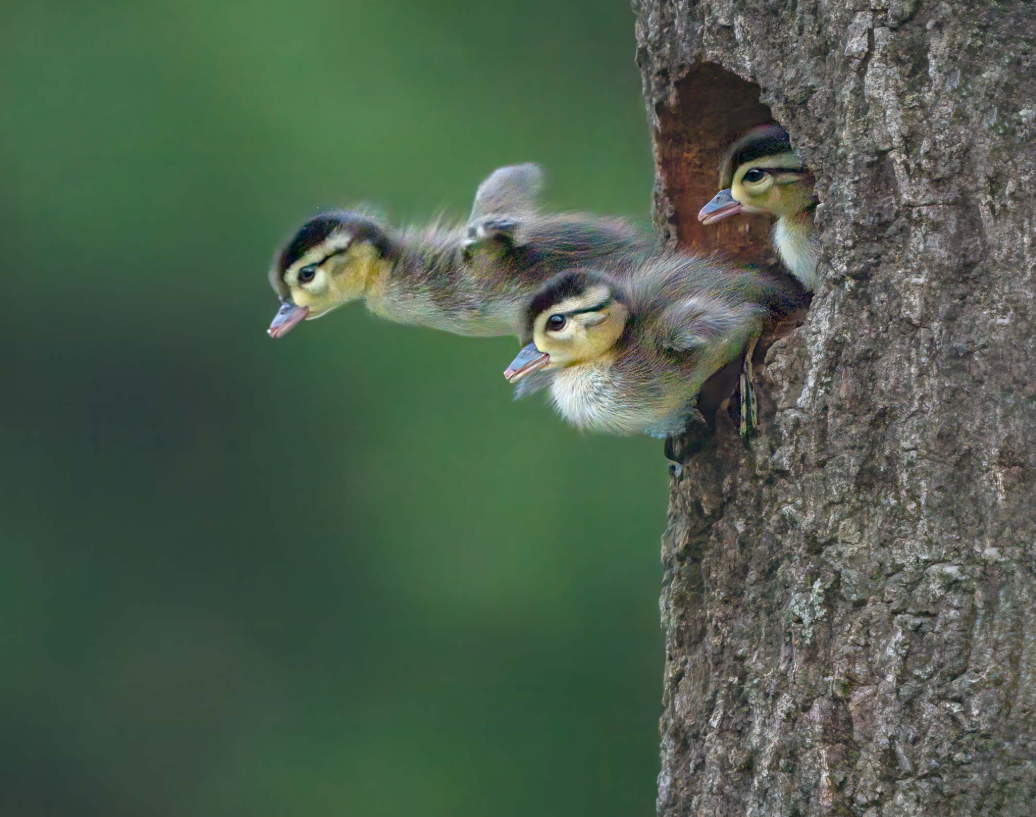
As their name implies, Wood Ducks are mainly found in forested areas, especially where large trees overhang the water. Being cavity nesters, Wood Ducks rely on dead trees and snags to find holes and crevasses to nest in, as the ducklings above demonstrate. Due to habitat loss and changing land use practices, man-made nesting boxes are often the only suitable nesting sites available. Boxes should ideally be placed near water and slightly concealed. Only the female incubates the eggs, a process which can last for 25 to 35 days. When the ducklings hatch, they jump from the nest to the ground or water below. Their light weight, downy feathers, and pliable bones allow them to land unharmed. The female then leads them to the nearest water body. Wood ducks are one of the few North American waterfowl that can raise two broods in one year, especially in southern regions.
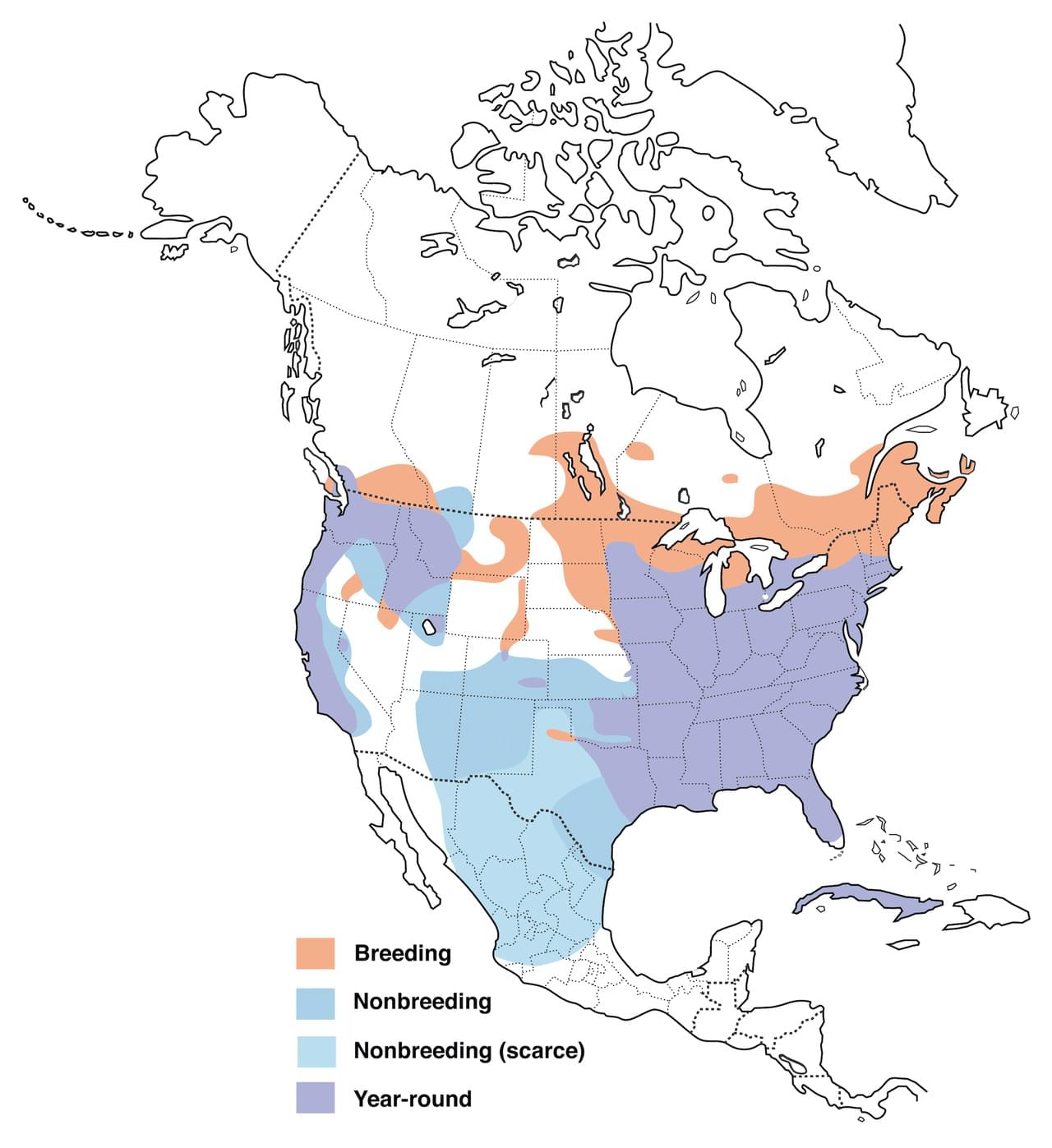
Interesting that we’re located on the breeding/year-round border line