
by Chris Thompson, photos by Jon Gratton and Rae Henneman
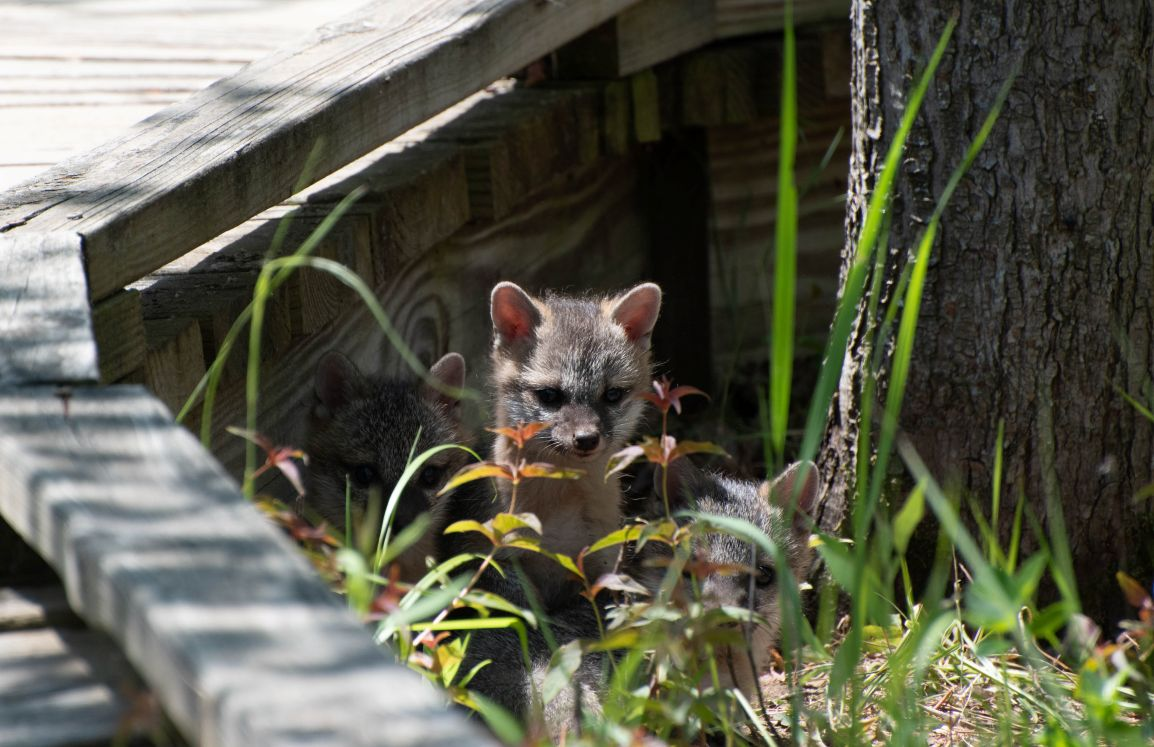
This May and June, visitors to Schmeeckle Reserve may have noticed some fuzzy additions to the Reserve. Under one of the many wonderful boardwalks, a mother gray fox decided to make her den!
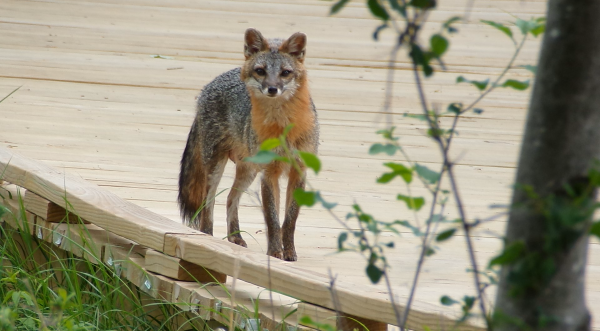
Though the Friends of Schmeeckle trail cameras have captured gray fox numerous times over the years, this was the first confirmed den in recent memory in Schmeeckle Reserve.
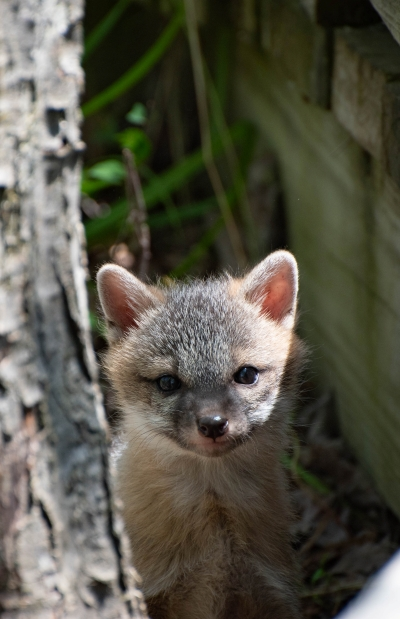
Weighing in at 10 to 15 pounds and measuring only 3 foot long from nose to tip-of-tail, gray fox are the smallest member of the canid (or dog) family found in Wisconsin. Found statewide, gray foxes can be found in almost any habitat, but due to their secretive nature tend to be less seen than the more well known and slightly larger red fox. They are not considered threatened or endangered currently in Wisconsin.
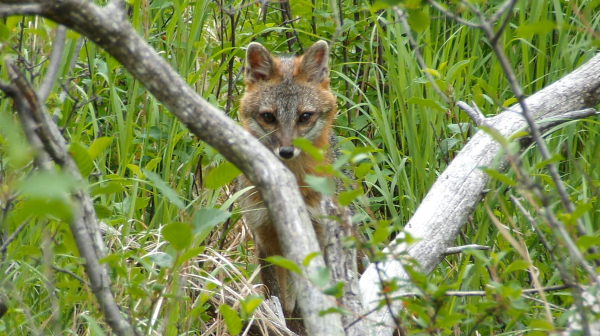
Baby gray fox are called kits. Usually born in spring, the young open their eyes at around 10 days, and will begin to venture out of the den after about 4 weeks. At 10 weeks, they are usually weaned. Often the family will stay together until fall, but tend to become more solitary come the winter months.
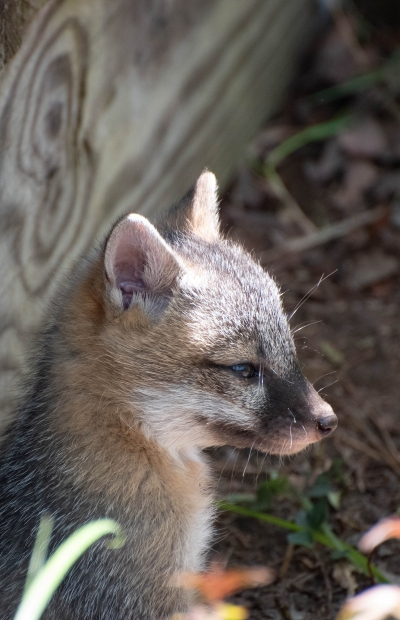
In terms of diet, the gray fox is our most omnivorous canid. They are opportunistic foragers that will eat virtually any kind of meat, fruit, vegetable, or insect.
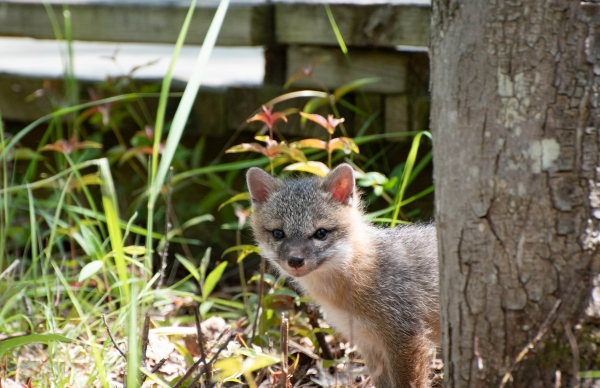
An interesting fact about gray foxes is that they have semi-retractable claws and are our only native canine that can easily climb trees. This adaptation allows them to avoid predators, raid bird nests for food, and utilize tree cavities for den sites.
If you happen to come across a gray fox, please give it some space, and enjoy viewing this interesting little canid.