by Chris Thompson
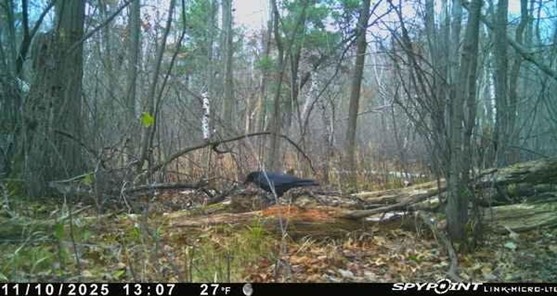
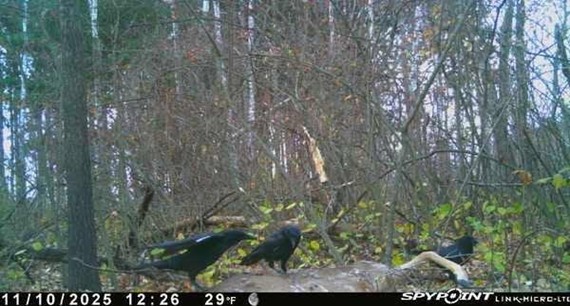
Schmeeckle Reserve has recently experienced several white-tailed deer mortalities. To document the ecological process of scavenging and better understand wildlife interactions, the Friends of Schmeeckle Reserve positioned a trail camera near the remains. The camera records the various creatures utilizing the carrion and one animal was an early and constant visitor -the American Crow.
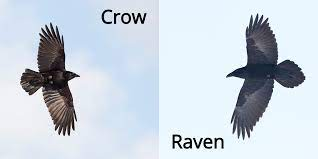
Crows are large, all-black birds with a heavy, straight bill. In flight, their tail is typically rounded or square-tipped, which helps distinguish them from the larger Common Raven, found primarily in Northern Wisconsin, whose tail is wedge-shaped.
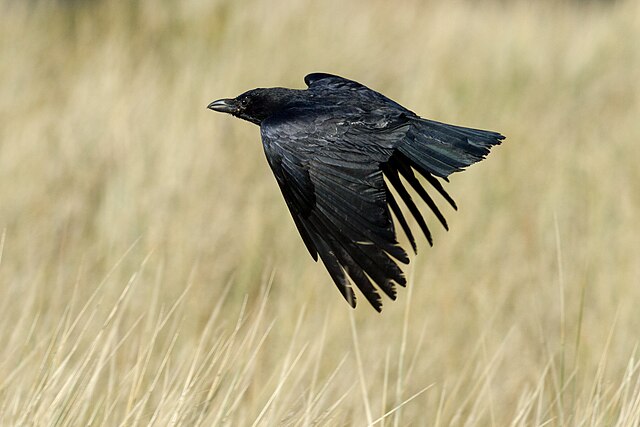
Image from Creative Commons, Wikimedia
They are opportunistic omnivores and scavengers, eating practically anything. Their diet includes insects, earthworms, small animals, seeds, fruit, carrion (like the white-tailed deer seen vaguely in the photos), garbage, and the eggs and young of other birds.
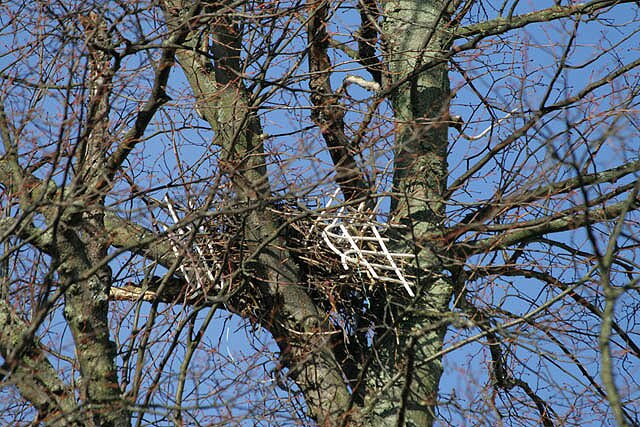
Image from Wikimedia, geograph.org.uk
American Crows are highly social and live in family groups. These families often include offspring from previous years, who act as “helpers” to raise the current brood. Crows build large, bulky nests of sticks and twigs high up in trees (often evergreens) in spring, usually laying four to six eggs.
In the winter, they often congregate in large communal roosts that can number in the hundreds, sometimes being seen urban areas.
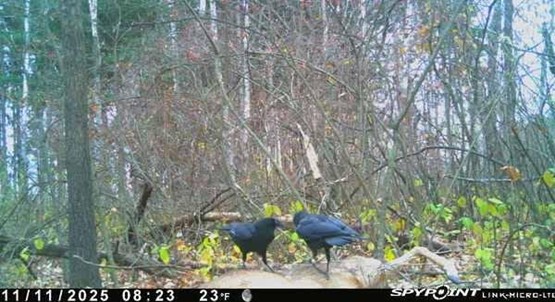
Crows are among the most intelligent birds in the world, with cognitive abilities often compared to primates. They are excellent problem-solvers, can use simple tools, have a complex communication system, and are known to recognize and remember human faces. The American Crow’s ability to adapt to human environments and their remarkable intelligence make them a noticeable and successful part of Wisconsin’s wildlife.